The minister writes… from our May 2026 newsletter
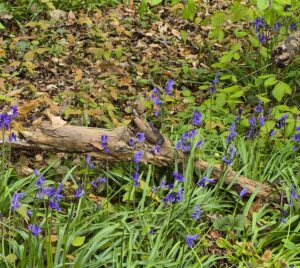
photo courtesy of S. Gardner
Dear friends,
I was walking around Ambarrow Woods last weekend and came across hundreds of bluebells – the true English bluebells with their gentle scent and sweetly drooping heads. I took lots of photos on my phone but it was hard to do them justice or to decide whether to go for close-ups or attempt to capture scenes that looked like an impressionist’s painting.
In British folklore, bluebells are sometimes called ‘fairy flowers.’ One old legend says that they ring to summon fairies—and that anyone who hears them may be drawn deeper into the woods, never quite finding their way out again. I’m not so sure about that(!) but there certainly was something enchanting about them which had drawn lots of walkers that day. I had only turned up to walk the dog – a happy accident – but others it seemed had had word and had come specially to enjoy them whilst they could. For it is only for a few short weeks they transform the ground on which they grow into a purple-blue mist.
I think the bluebells can teach us some spiritual lessons. In the Victorian ‘language of flowers’ they symbolise humility, constancy, and gratitude.
You have to go to quiet places to find them. They are not showy plants demanding that we should notice them but with a humble grace they beautify wherever they grow. We have to slow down and open our eyes if we want to see them before they fade. How often does God speak to us in quiet ways? If we are busy and rushing or if the clamour of life is too loud, we can miss his still small voice of calm. Their bowed heads suggest an attitude of prayer and we can find God best in prayer. Can we too beautify the places in which we live and grow?
We see constancy in how these little flowers return year upon year. Given the right conditions the bluebells will spread, not in neat, planted rows but forming a carpet of colour – like the slow, almost unseen growth of God’s kingdom. They remind us that we need to remain faithful if we hope to be part of that flourishing, if we too want to be part of that transformation.
Lastly, the bluebells are a symbol of gratitude. They certainly invoked gratitude in me and in those other walkers that day. There was privilege in the sight and scent of them, of being reminded of spring-times past and the awareness that we are each a small part of something so much bigger and more wonderful than we can ever adequately describe. All we can do is give thanks to God for his love displayed in Creation and in Jesus.
May the lessons of the bluebells stay with us throughout the rest of this post-Easter season.
In quiet woods where bluebells ring,
A softer note than birds in spring,
They bow their heads as if in prayer,
And fill with grace the hidden air.
(adapted from traditional verse)
With every blessing,
Sharon